

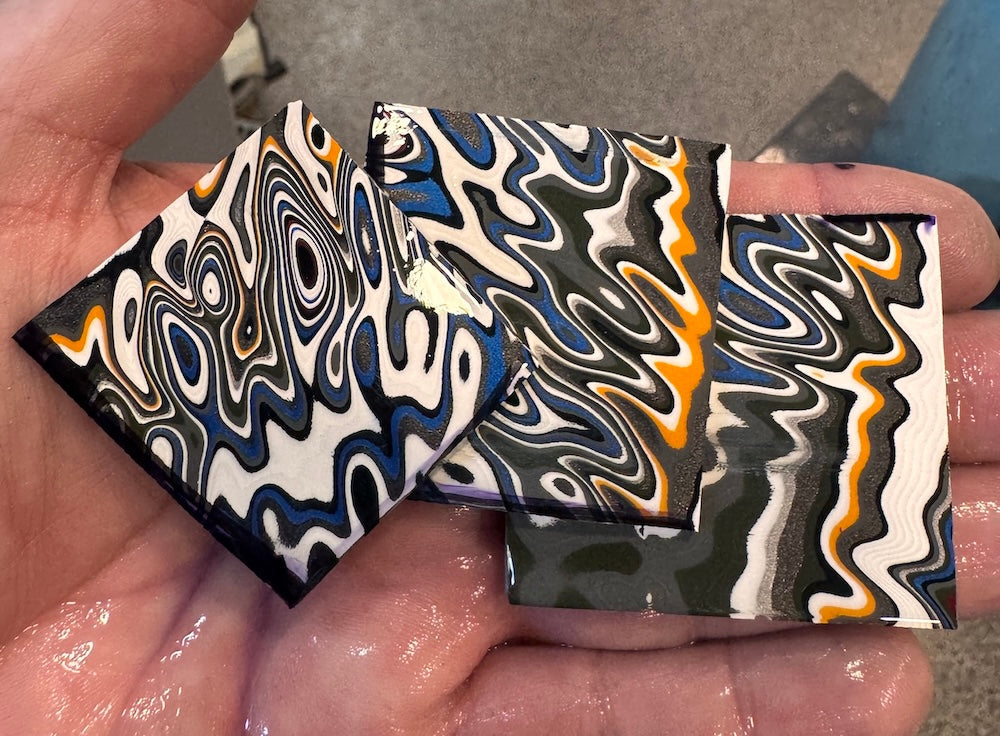
Fordite should not exist.
Or, more accurately, it was never supposed to exist. It was a nuisance, an industrial by-product created during an era of automotive manufacturing when efficiency was measured rather differently from today. Nobody set out to make it, nobody designed its extraordinary internal patterns, and nobody could have predicted that decades later, fragments of it would be cut, polished, collected, set into jewellery and, eventually, used to make watch dials.

Fordite — also known as Detroit Agate or Motor City Agate — is not a stone at all. It is paint. Hundreds, sometimes thousands, of layers of automotive paint compressed into a solid mass by repetition, heat and time.
To understand how that happened, we need to return to the great American automotive factories of the 20th century.
Before the sophisticated electrostatic and robotic painting systems used today, car bodies were sprayed much more liberally. Inevitably, not all of the paint landed on the cars.
Overspray settled on the equipment around them, particularly the tracks, racks, and skids that transported bodies through the painting process. The freshly painted cars would then enter an oven to cure their finish. The equipment went with them, meaning the unwanted paint accumulated on those surfaces was baked too.
 Then another car arrived in the same bay, with its bodywork mounted onto the same tools. The process began again.
Another colour was sprayed. Another layer settled. Another journey through the oven followed.
Repeat that process day after day, year after year, and something remarkable happens. What begins as messy overspray becomes a dense, extremely heavily cured mass of coloured material. Eventually, these deposits became thick enough to interfere with production and had to be chipped away. Most of it was simply industrial waste, tossed thoughtless into trash receptacles and transported to landfill.

Some factory workers, however, noticed that cutting through the material revealed extraordinarily complex patterns resembling geological strata or natural agate, and began hoarding it at home, often piling the slabs high, filling rooms, garages, and outhouses (often, as we’re told, to the annoyance of their spouses).
Their foresight was prescient. What was then a speculative salvage operation, now looks like a genius rescue mission. Thanks to them, we have a finite but significant store of material to work with.
But why finite, I hear you ask? Cars are still being made, with thousands painted every day. What changed?
The introduction of electrostatic paint application largely stopped the process. Modern systems direct paint towards the electrically charged car body far more efficiently, dramatically reducing overspray. Consequently, traditional Fordite is effectively a limited product of its time: a physical remnant of a manufacturing method that has largely disappeared.
That scarcity is interesting, but it isn’t what makes Fordite special.
It’s what it can be transformed into that makes it so fascinating.
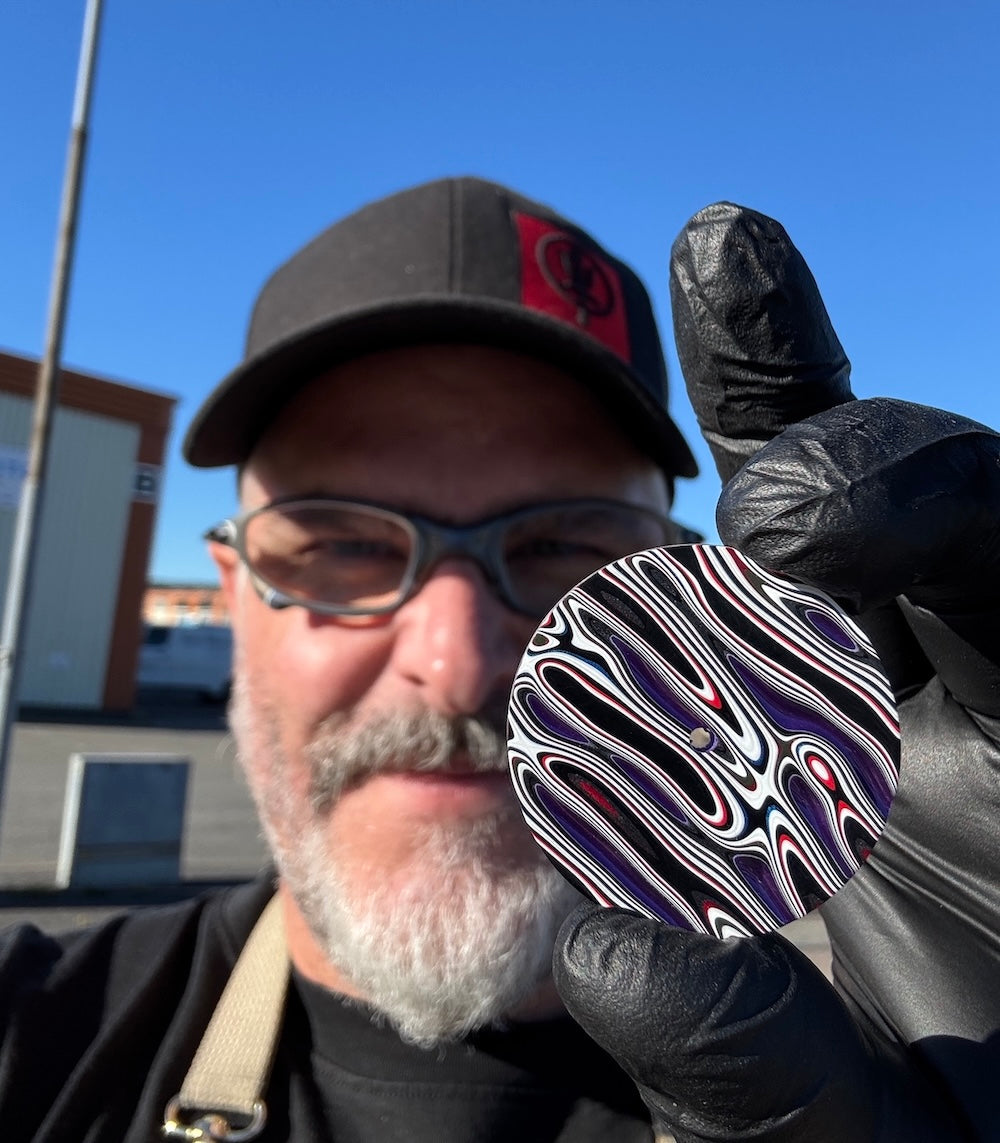
This is where James Thompson, better known as Black Badger, enters the story.

Thompson has worked with unconventional materials throughout his career and is no stranger to rounds upon rounds of experimentation, patiently triangulating his method until it reaches perfection (or, least, doesn’t blow up in his face).
Fordite is different. It presents an unusual problem. Because of its almost organic formation process, it cannot simply be designed in the conventional sense. The patterns exist somewhere inside the material, but until the surface is removed, there is no way of knowing precisely where or what those patterns will be.
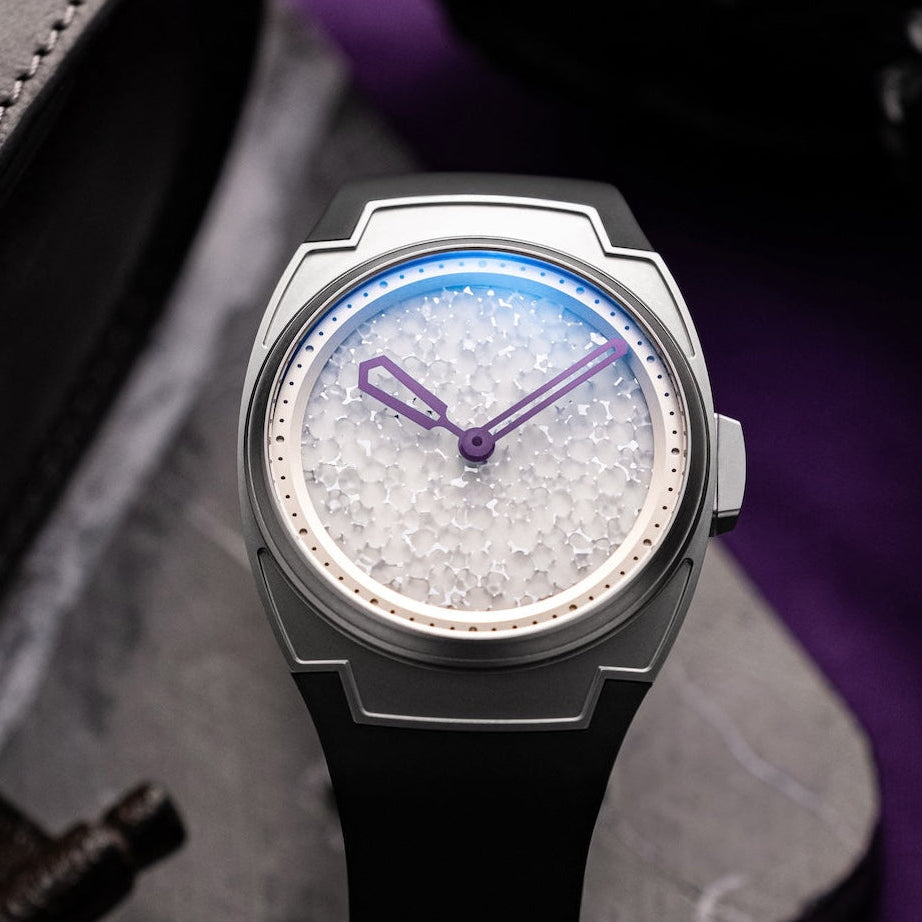
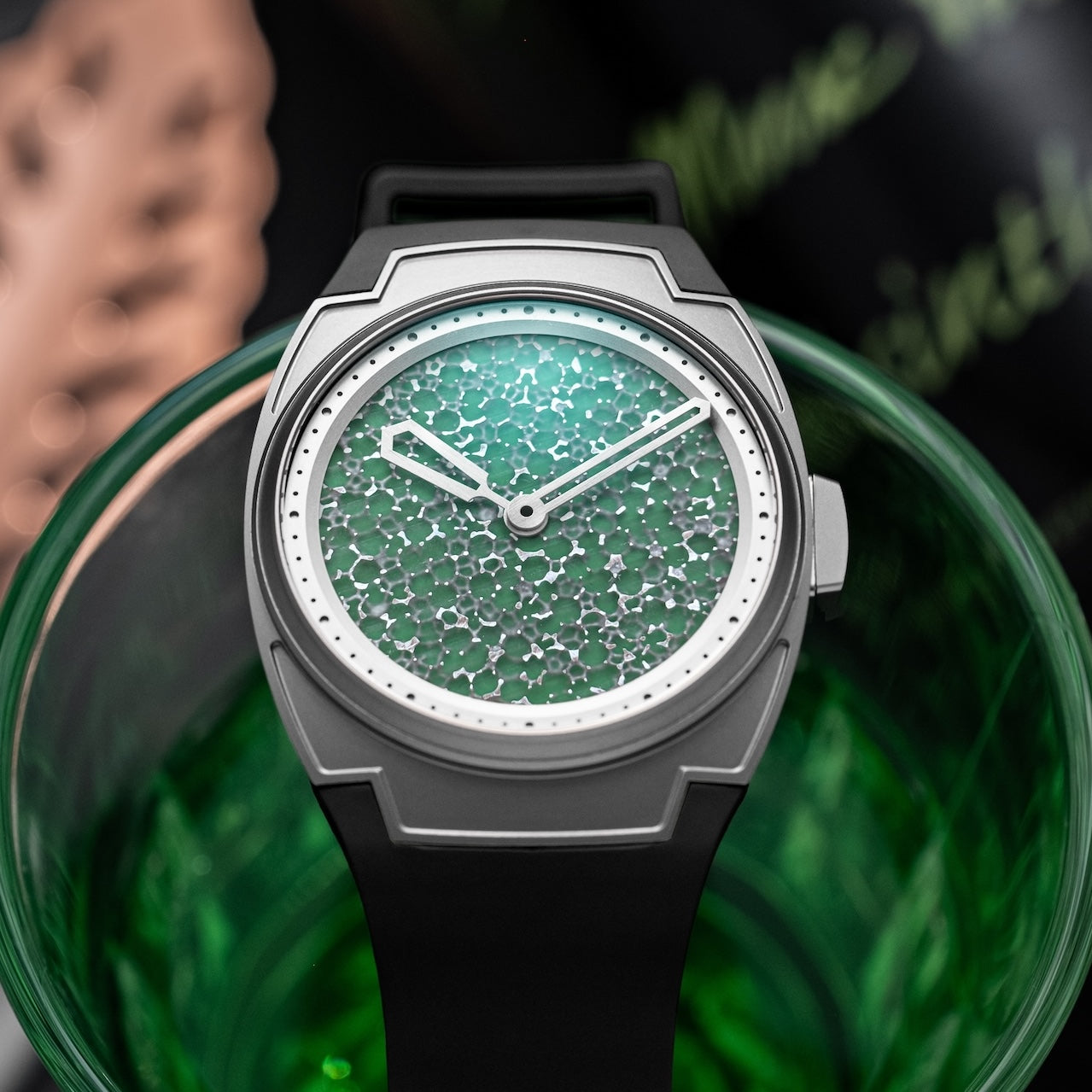
When Thompson began developing Fordite dials for Arcanaut, the challenge therefore became less about fabrication and more about interpretation.

The raw material arrives as irregular nodes. From there, Thompson begins removing material progressively, working down through layers that may be separated by fractions of a millimetre. What looks promising at one level might become spectacular slightly deeper down. Continue slightly further, however, and the entire composition can disappear (or vice versa).
As Thompson has often explained, moving just a quarter of a millimetre through a piece can completely transform the pattern.
Knowing when to stop is where the experience comes in. Restraint the most important part of wrestling this incredible material into submission.
A particularly beautiful swirl, fracture or meeting of colours might exist for only a tiny depth within a node. Sand through it and it is gone permanently. Forever lost. Thompson has seen it more times than a man should have to see such beauty evaporate before one’s eyes. It’s a tough thing to take, and has left him crushed after many hours at the diamond wheel result in nothing but disappointment.
And then there is the final surface itself.

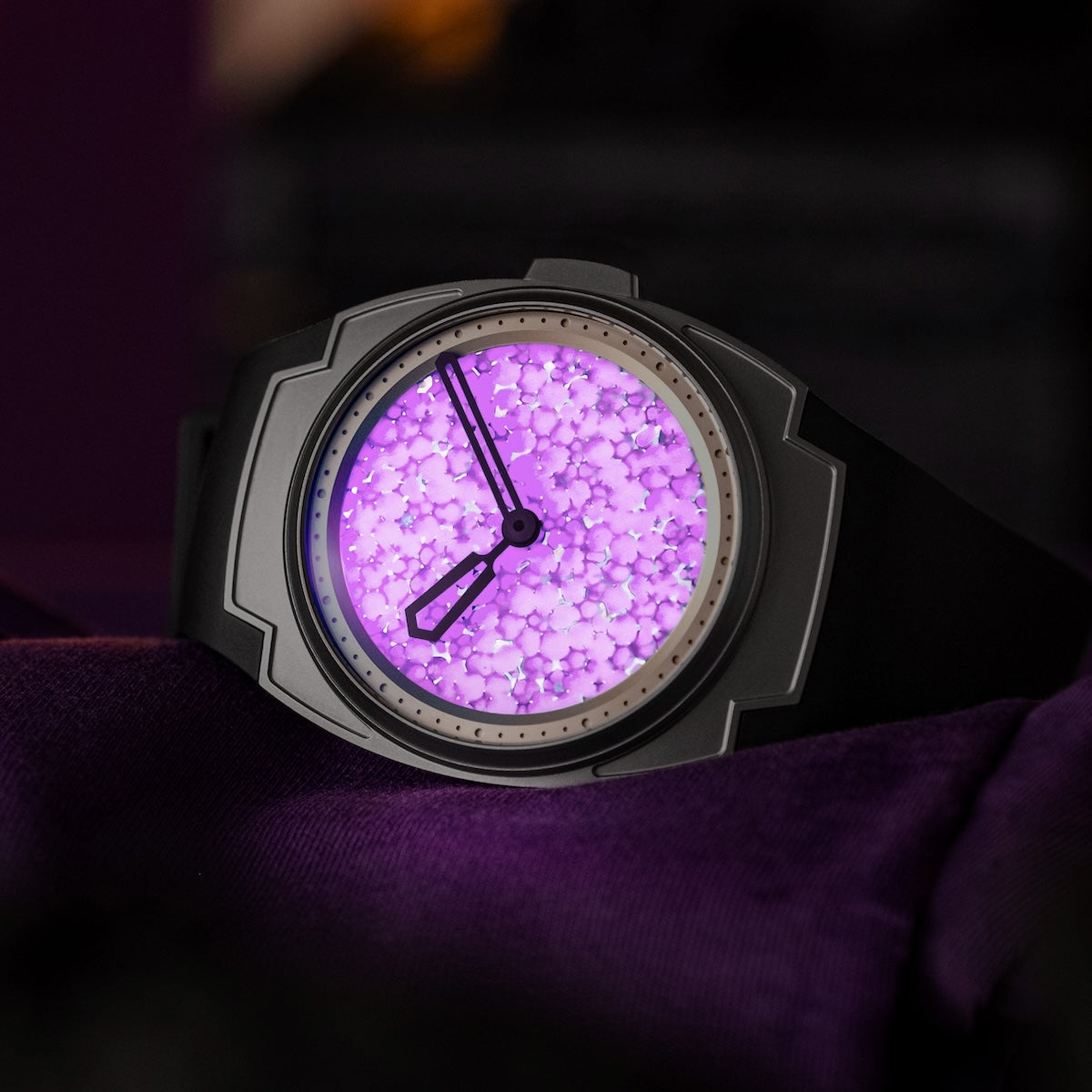
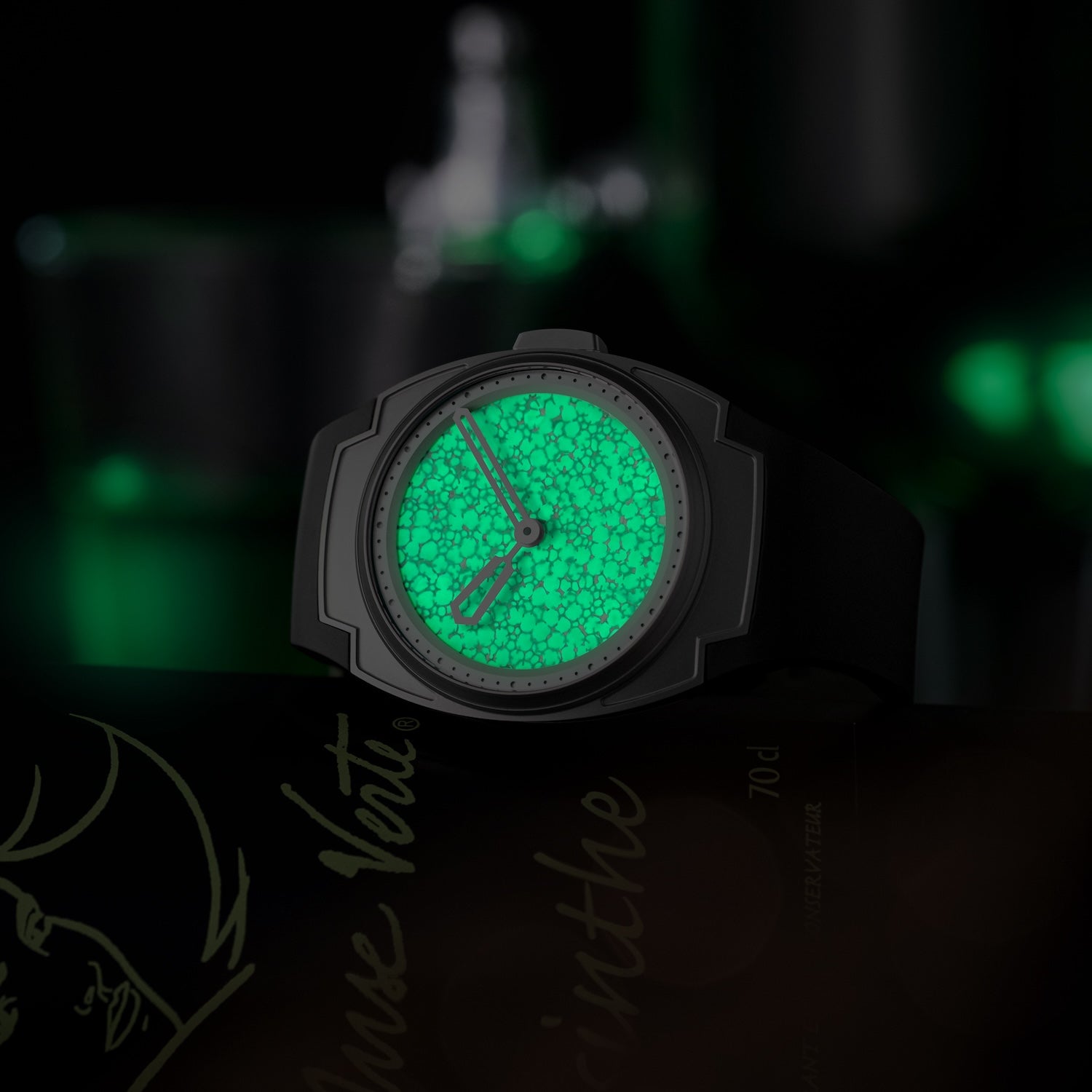
Fordite responds particularly well to extremely fine finishing because every scratch removed allows the internal colour structure to become clearer. What initially looks like an interesting piece of old paint begins to develop genuine visual depth. Lines sharpen. Colours separate. Tiny layers that were almost invisible emerge. And don’t forget the clear coat! Rather than being an invisible interloper, the glossy top layer that protects the coloured paint applied directly to the primed bodywork, provides a satisfyingly crisp, highly glossy border between bands and pools of matte paint. It is not just incredibly satisfying to behold, but also strangely moving given the backstory of the material itself.
Of course, whenever there’s something rare, beautiful, and increasingly difficult to find, there will inevitably be someone willing to fake it. Genuine Fordite nodes do not come cheap, and the investment of time necessary to become proficient enough at working with the material to get the best out of it requires and even more significant investment of time. Unsurprisingly, some fly-by-night chancers have done their best to create an inauthentic substitute that completely bypasses the time-consuming (and no-longer extant) process of true Fordite creation.
“Fake-dite” is the nickname given to the material manufactured to resemble genuine Fordite. Usually, con-artists will begin by building up layers of modern paint or resin before cutting and polishing the resulting block in the same manner as one would reveal Fordite's natural patterns.
While the main difference is provenance, there is a significant gulf in material quality, too. Real Fordite is formed from countless layers of oversprayed, solvent based, industrial paint, repeatedly baked hard on factory production lines. It is rock solid, UV resistant, and reliably fused. Fake-dite doesn't have the same stone-like qualities and has been known to fall to bits without warning.
That said, spotting it isn’t always easy. Generally speaking, genuine Fordite tends to exhibit irregular, unpredictable layering, variations in thickness, tiny imperfections, and the occasional inclusion accumulated during its former life (these inclusions, such as fingernails, masking tapes, or bolts or screws, alter the way the paint sits and drips as it dries, creating unique anomalies in the composition — don't worry, we don't even leave any traces of these inclusions in out finished dials; we only attempt to preserve the knock-on effect of their presence).
Fake-dite can look suspiciously orderly: consistent bands, conveniently coordinated colours, and patterns that feel almost too composed. Genuine Fordite was never trying to be beautiful. And, ultimately, that's exactly why it is.
Most watch dials begin with an idea and progress towards its physical realisation. Fordite works backwards. The finished design already exists somewhere inside the material.
Thompson’s job is to find it and to let every unique pattern he’s able to preserve live a new life on the wrists of watch lovers the world over.
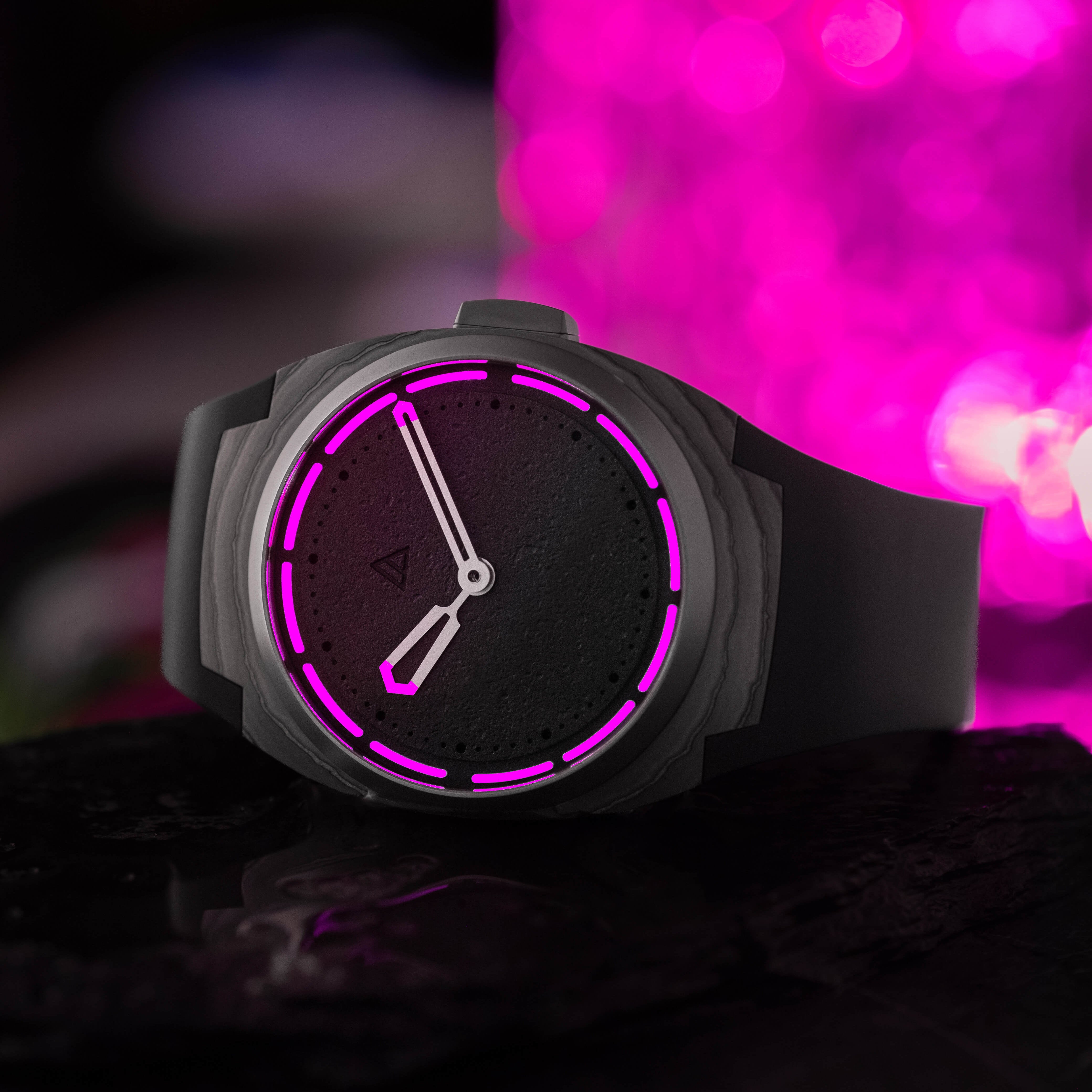
Check out the available Fordite dials and the new Fordite 2.0 configurator on the official Arcanaut website here.
Sign up below to get notified for futures releases of the Fordite series.







Leave a comment
This site is protected by hCaptcha and the hCaptcha Privacy Policy and Terms of Service apply.