

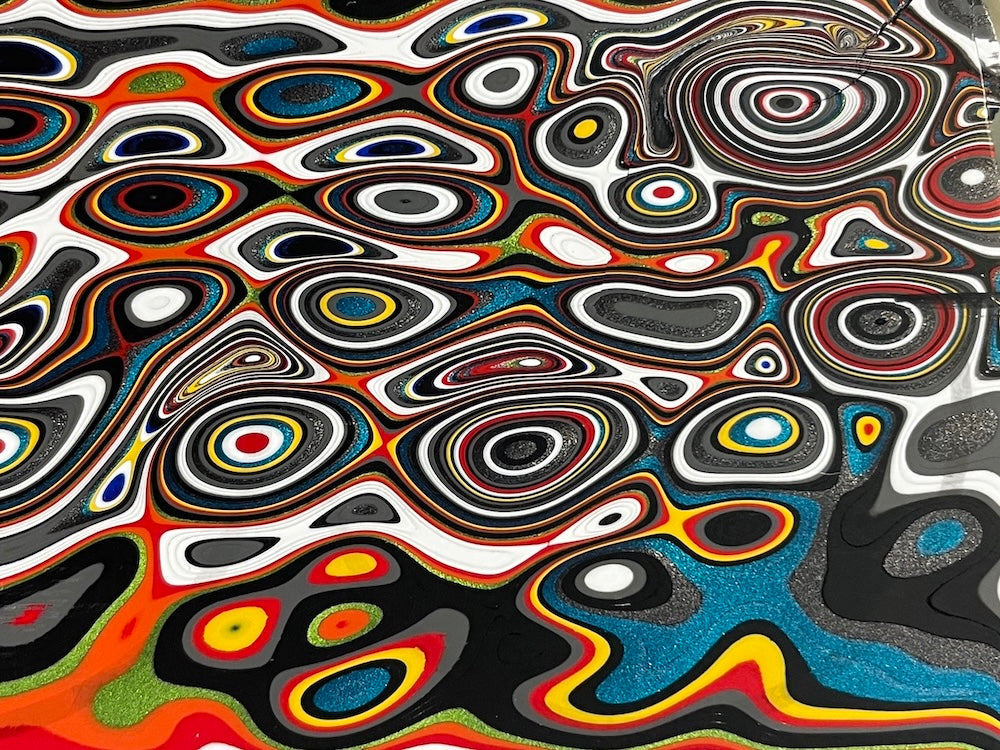
During the height of American automotive manufacturing, layers of over-sprayed paint accumulated on the racks, skids, and fixtures that carried car bodies through paint shops. Those layers were repeatedly baked hard as each new vehicle passed through the curing ovens. Over years, sometimes decades, the material built into dense stratified masses of colour: industrial sediment recording the changing tastes of the automotive world.
Long after the factories were modernised and those processes disappeared, the hardened deposits survived.

Today, Fordite is finite, inconsistent, unpredictable, and increasingly difficult to source. Which is precisely why working with it demands far more than simply knowing how to cut and polish a piece of material.
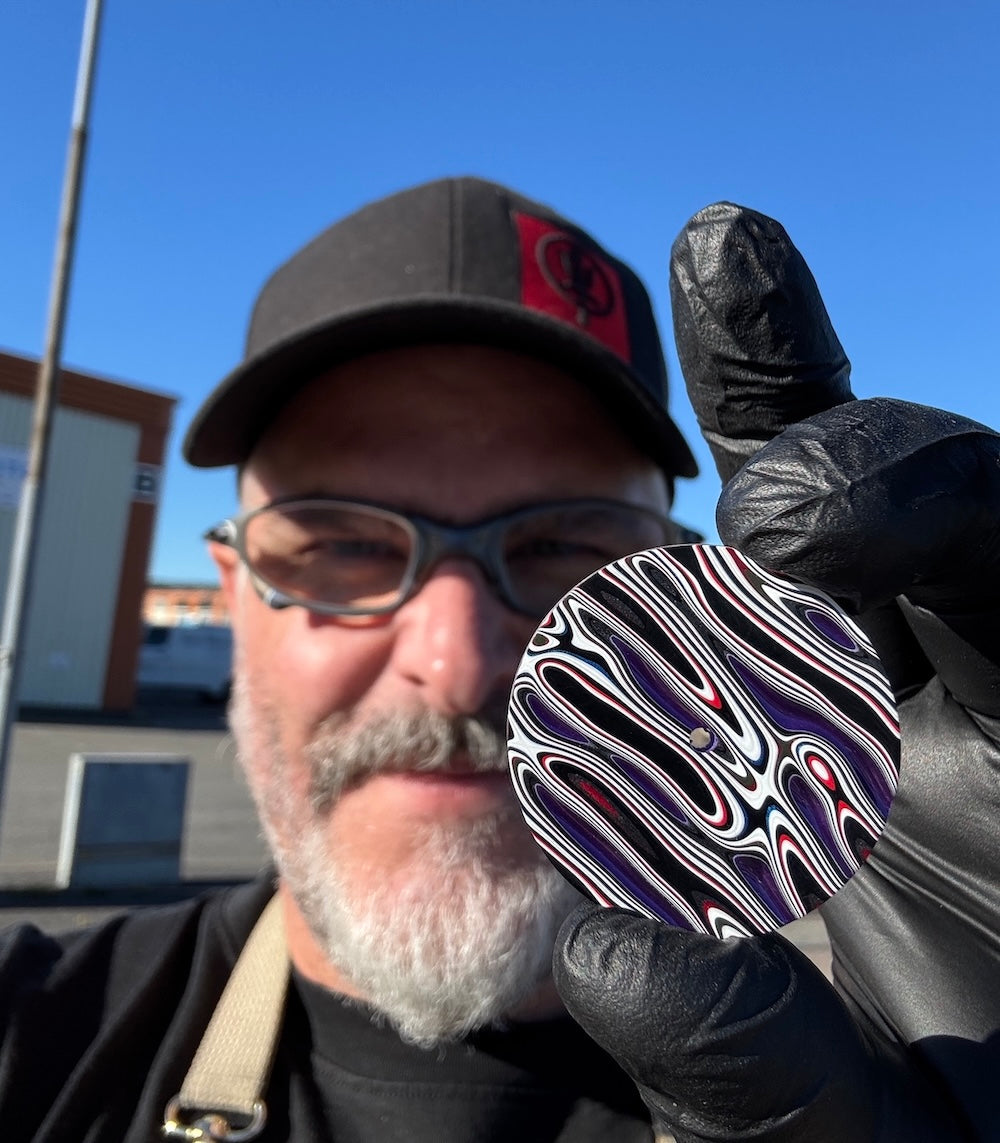
For James Thompson, better known as @blackbadger, the process begins long before a dial reaches the bench.
James has spent years building relationships with collectors, specialists, former automotive workers, and people who understand the provenance of genuine Fordite. That experience is crucial. The material varies enormously depending on where it originated, how it was formed, how it was removed, and how it has been stored since. Not every colourful block is suitable for precision work. Not every piece sold as Fordite is what it claims to be.

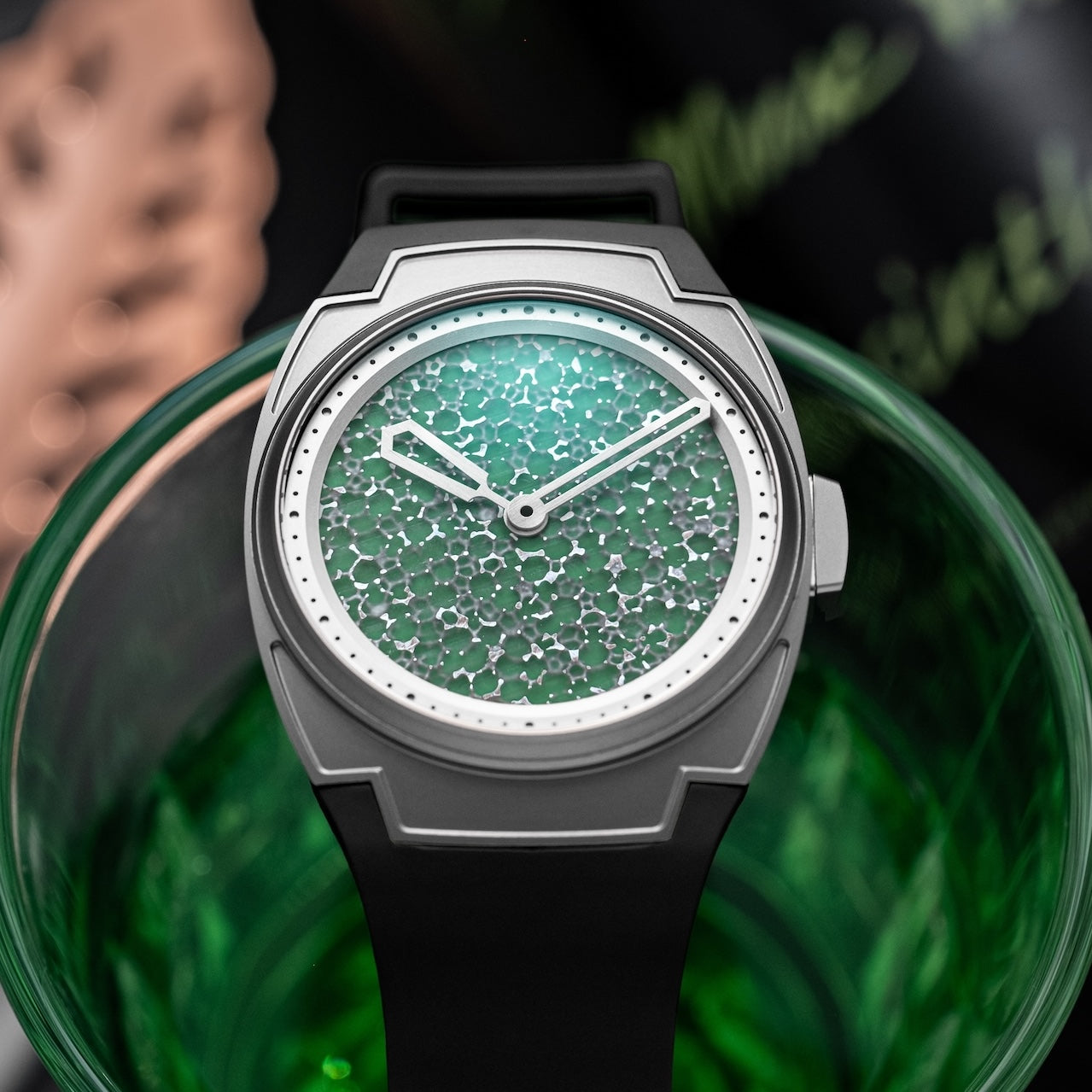
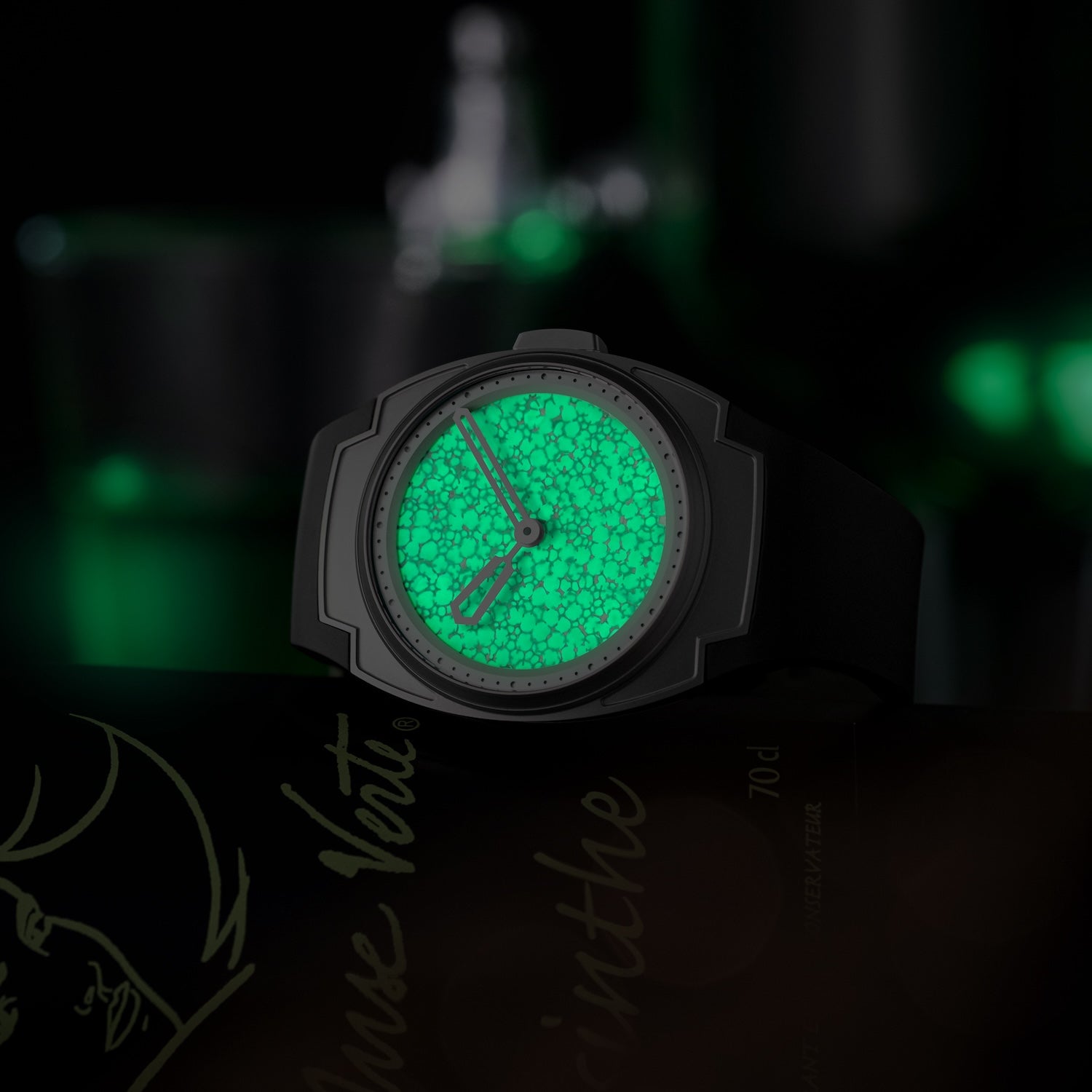
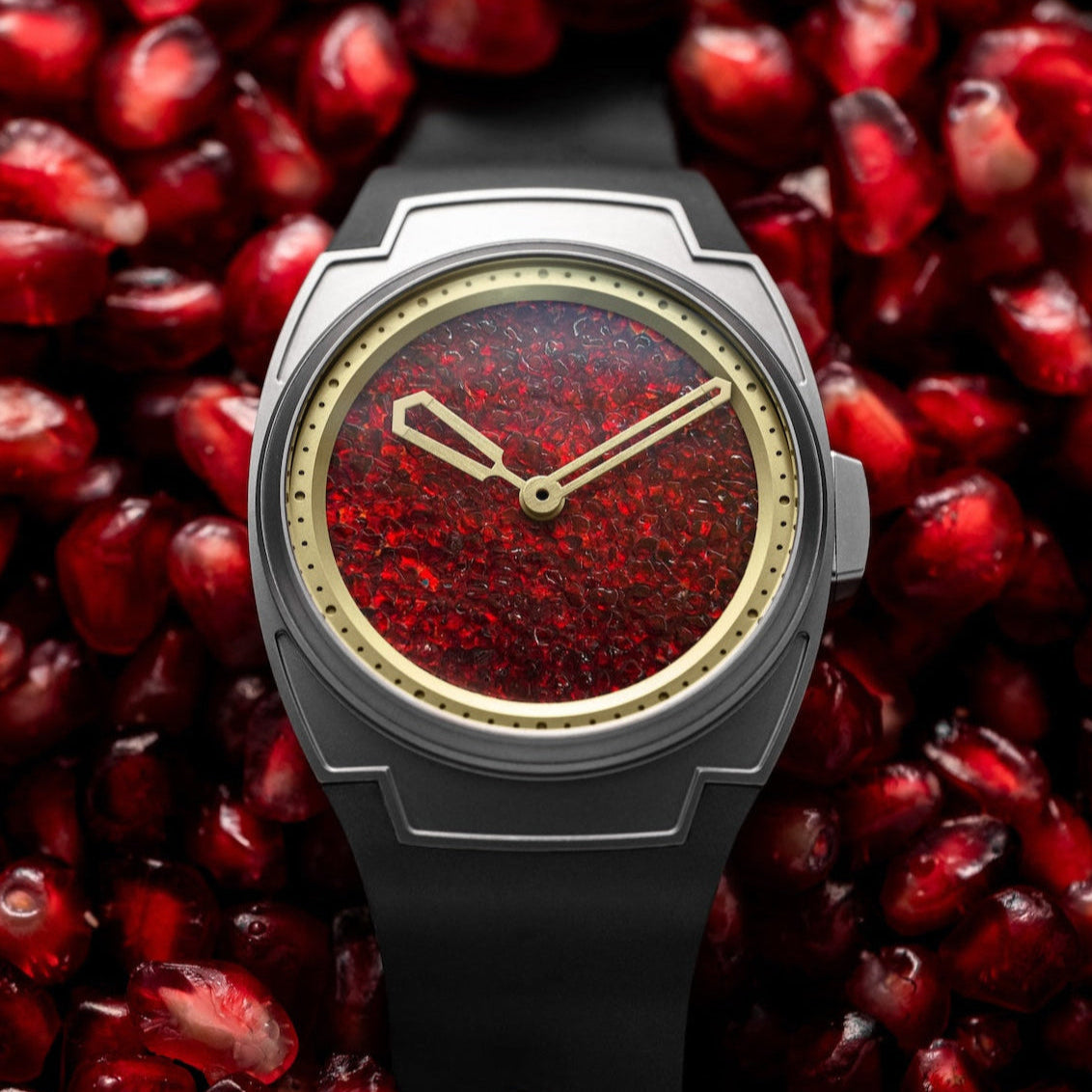
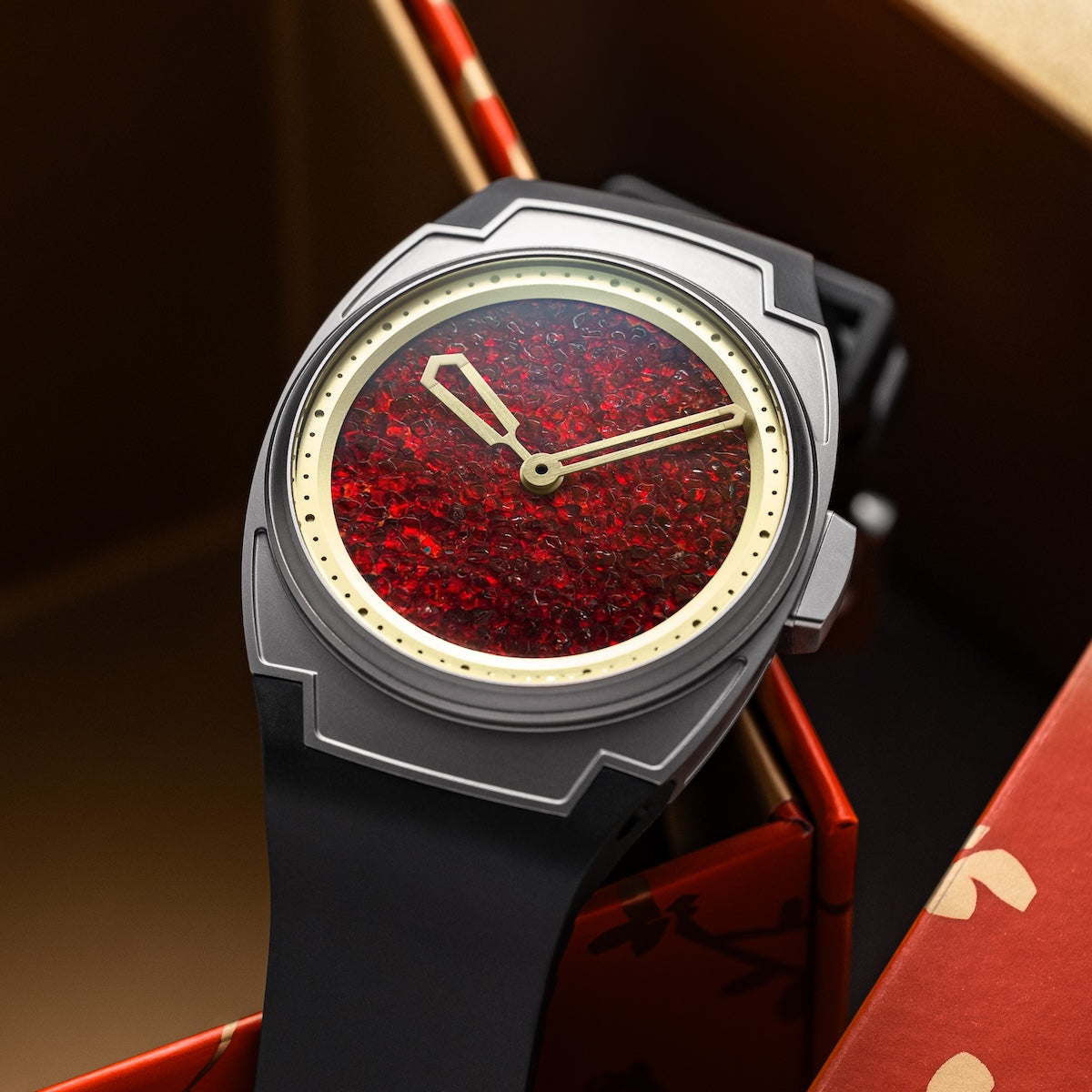
A raw piece of Fordite gives very little away. Its outer surface may suggest one palette while concealing something completely different underneath. The colours visible on a finished dial are determined by the precise plane and angle at which the material is sectioned. Move that cut fractionally and an entire composition can change.
This is where James’s experience becomes invaluable.
Rather than forcing the material towards a predetermined result, he studies it. The density of the layers, their direction, their rhythm, the relationship between thick bands and microscopic lines of colour: all of it informs the next decision. Every cut, every pass of the sanding wheel, removes material that can never be replaced, so there is little room for experimentation once the work begins.
The process of reducing a piece of Fordite to dial thickness is understandably slow.
Material is removed gradually, through successive stages of abrasion and refinement. The surface must remain flat. The structural integrity of the Fordite must be preserved. Heat has to be controlled. Pressure has to be consistent. And throughout the process James is watching the pattern develop, because every few microns can reveal something new.

That restraint is perhaps the most important part of the craft.
The temptation with a material this dramatic is to chase spectacle: brighter colours, louder patterns, more obvious contrasts. James does the opposite. His job is not to make Fordite interesting. It already is. His job is to understand when to stop.
Years spent researching unusual materials have given him an unusually sensitive understanding of how they behave at extremely small scales. In Fordite, that experience becomes visible. He knows how far a surface can be pushed, how much material can safely be removed, and when additional polishing would begin to erase rather than improve its character.
The final dial may appear effortless. It is, however, anything but.
Behind it sits sourcing, judgement, handwork, microscopic precision, patience, and an extraordinary familiarity with a material that was never intended to become anything at all.
That James Thompson can turn it into wearable art is not simply a matter of technique.
It is the result of knowing Fordite well enough to let the material have the final say.
Sign up below to get notified for futures releases of the Fordite series.









Leave a comment
This site is protected by hCaptcha and the hCaptcha Privacy Policy and Terms of Service apply.